How to Season an Arnest Niigata Made-in-Japan Wok | A Complete Guide to Rust Prevention and Maintenance for Uncoated Iron Woks
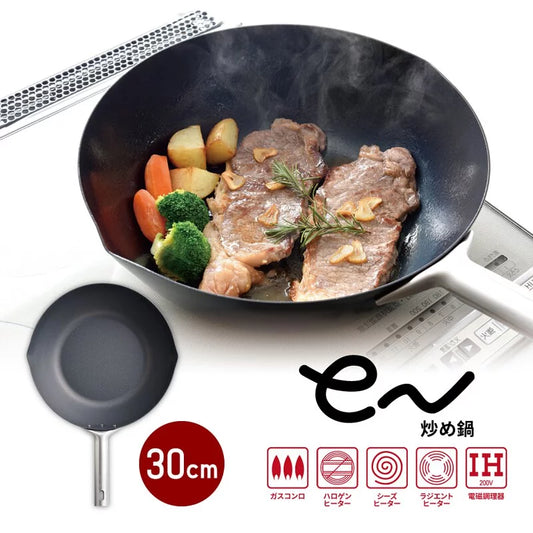
When it comes to Japanese kitchenware that both delights and intimidates home cooks, the Japanese iron wok is definitely one of them. It’s ten times more durable than non-stick pans and provides excellent "wok hei" (wok breath), but the "seasoning" process often deters many. Today, we're introducing the Made-in-Japan Arnest eN rust-resistant wok from Niigata Prefecture, hailing from Japan's ironware hub—Tsubame-Sanjo, Niigata Prefecture. It features a coating-free, naturally non-stick design without any chemical coatings. As long as you master the correct seasoning method, you can cultivate a personalized wok that "gets better with every use."

Why Choose a Japanese Iron Wok: The Core Craftsmanship of the eN Wok
Before delving into the seasoning process, let's understand why this Japanese iron wok is considered a "miracle tool."
- Origin: Tsubame-Sanjo, Niigata Prefecture, Japan, a century-old hub for metal processing, meticulously handcrafted by artisans.
- Processing Technology: Exclusive "Fiberline Processing" with a double treatment of nitrided iron and oxidized iron layers, free from any chemical coatings, providing natural physical non-stick properties.
- The wok body is only 1.5mm thick, balancing lightweight feel with even heat distribution, making it easy on the wrist even during prolonged cooking.
- Made of pure iron, it is highly scratch-resistant, so stainless steel spatulas and steel wool are perfectly fine for cleaning.
- Compatible with all heat sources: open flame, halogen stoves, induction cookers (IH), and radiant heat stoves, ensuring it can be used with any cooktop at home.
This craftsmanship is key to Japanese kitchenware's emphasis on "one pot for a lifetime"—no coating means no concerns about coating peeling or chipping, and the cookware itself is the most natural non-stick material.
Seasoning Method: First Steps for Your New Wok
Upon delivery, the new wok surface has anti-rust oil and black iron powder from the nitriding process. This is normal and not a quality issue. Just follow these steps to season your wok:
- Thoroughly clean the wok surface with dish soap to remove the anti-rust oil and black iron powder from grinding, then wipe it dry.
- Heat the wok over medium heat for about 2 minutes (use low heat for IH induction cookers), then turn off the heat.
- Allow the wok to cool naturally until it can be touched by hand.
- Pour in about half a cup of cooking oil, covering the entire bottom of the wok.
- Heat over low heat for about 3 minutes, then pour out the oil.
- Turn off the heat and let the wok cool naturally. Then, use a kitchen paper towel to evenly spread a layer of oil inside the wok, allowing the oil to penetrate the iron surface.
After completing these six steps, your Arnest eN wok is officially seasoned and ready for normal cooking.
Non-Stick Secret: The Principle of Physical Non-Stick in Japanese Iron Woks
Many people's biggest question about Japanese iron woks is: without a coating, will it really not stick? The answer is a resounding yes, as long as you follow these three steps to "oil the wok" before each cooking session:
- Heat the wok over medium heat for about 1 minute (use low heat for IH induction cookers).
- Add an appropriate amount of cooking oil, covering the bottom, and heat until the oil begins to smoke.
- Use a spatula to evenly spread the hot oil over the entire wok surface, then you can start cooking normally.
With increased use, oil will continue to penetrate the fine fiber texture of the iron wok surface, gradually forming a natural oil film. This oil film is the secret to "getting better with every use"—over time, the iron wok will develop a more stable physical non-stick effect than non-stick pans, and it won't scratch or peel off like chemical coatings.

Daily Wok Maintenance and Cleaning Precautions
To keep your Japanese iron wok in optimal condition for a long time, daily maintenance is even more important than initial seasoning. Here are the recommended cleaning guidelines:
- Avoid using dish soap for cleaning. For daily cleaning, hot water with a brush, sponge, or steel wool is sufficient.
- Clean immediately with hot water after cooking. If heavily burnt or stuck, pour hot water into the wok, bring it to a boil, then scrub.
- Dry the wok as soon as possible after cleaning to prevent it from remaining wet for too long.
- After drying, apply a thin layer of oil to effectively prevent rust and sticking.
- Remove food from the wok as soon as possible after cooking to reduce the chance of rust.
If you can dry both the inside and outside of the wok thoroughly after each cleaning, and the weather is dry, you don't necessarily need to heat it on the stove every time. However, if the environment is humid, it's recommended to heat the wok until white smoke appears after each wash to ensure all moisture has evaporated before storing it.
FAQ: Common Questions About Japanese Iron Wok Maintenance for Beginners
Q: Why do black residues persist after continuous washing during initial seasoning?
The nitriding process on the wok's surface is followed by grinding, which produces black iron powder. This substance is iron material and has been tested by an independent Japanese testing agency to be harmless to humans, so it can be used with peace of mind.
Q: What heat level is suitable for cooking?
For open flame, medium heat is recommended. For induction cookers (IH), low heat is recommended. Avoid prolonged empty burning in one spot.
Q: Is it normal for the bottom of the wok to change color after heating?
This is a normal phenomenon and does not affect safety. It is mainly due to the formation of an oil film protection layer from cooking oil residues and the carbon content in the cast iron. Blackening indicates that the oil film has developed, and the wok will get better with use.
Q: After heating to dry out moisture, do I always need to oil the wok for maintenance?
If you use this product frequently, you can actually skip this step. However, if you only use it once every few days, it is recommended to apply a thin layer of oil for maintenance before storing.
Q: Is the iron wok scratch-resistant?
Its main material is iron, which is very scratch-resistant. Using stainless steel spatulas and steel wool for cleaning is perfectly fine for daily use.
Why Japanese Kitchenware is Worth the Investment
From seasoning to daily maintenance, this Arnest eN wok represents the spirit of Tsubame-Sanjo artisans: the ultimate thinness of 1.5mm craftsmanship, food safety considerations with no chemical coating, and the philosophy of developing a personalized oil film over time. Compared to ordinary non-stick pans, a Japanese iron wok requires more effort in initial seasoning and regular oiling, but in return, it offers long-term benefits in durability, "wok hei," and health—this is why more and more consumers are switching from easy-to-clean pans to Japanese kitchenware.